Independent community & visitor guide • Not affiliated with or operated by the City of East Liverpool
THE STORY BENEATH THE STREETS

Built by industry.
Shaped by the river.

East Liverpool's story is bigger than a museum exhibit. Surveying history, pottery, river commerce, architecture, amusement, crime lore, decline and reinvestment all occupy the same few miles.

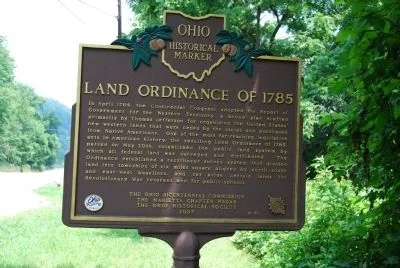
1785
Point of Beginning
1840
Pottery begins
1900s
Industrial peak
1934
Pretty Boy Floyd
Now
Early revitalization
INTERACTIVE TIME MACHINE

Drag through two and a half centuries.

Scrub the slider, tap a year, or press play. The scene, facts and photography change with each chapter—from the first federal land survey to Crockery City and today's rebuilding efforts.

01
Federal land survey1785

Point of Beginning

Read the source ↗
Use the slider, arrows, year chips or Play History
1 of 11785 • Point of Beginning
THE CITY BEHIND THE DATES

Potters, bridges, parks, floods, theaters and neighborhoods.

The East Liverpool Historical Society's research—much of it preserved or referenced through Carnegie Library, the Museum of Ceramics and Cleveland Memory—opens up far more than a simple pottery timeline.

GO DEEPER

Two rabbit holes worth falling into.

The timeline gives you the arc. These experiences unpack the factories, vanished places, people and streets behind it.

LOST & CHANGED EAST LIVERPOOL

Some of the best stories are about places that vanished.

Destroyed, moved, repurposed or bypassed places can become some of the most memorable parts of the heritage experience.

CROCKERY CITY LEDGER

The scale of the pottery economy was enormous.

These numbers turn the industrial story into something visitors can understand at a glance.

STORY ROOM

Open a chapter and step inside it.

Enter the city through its people, workplaces and landscapes. Archive views bring individual chapters into focus.
HISTORICAL MARKER ATLAS

Stories beside your footsteps.

The marker network lets visitors discover theaters, hotels, pottery, highways, monuments and civic landmarks without needing to know what to search for.

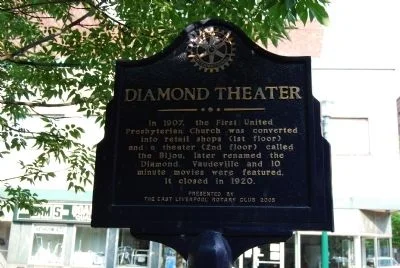
Diamond Theater historical marker, photographed July 3, 2011
Entertainment1907–early 20th century

Diamond Theater

A former church became a place for vaudeville and early movies, remembered by a marker near the Diamond.

Market Street at Fifth Street

Mike Wintermantel · photographed July 3, 2011 · Historical Marker Database
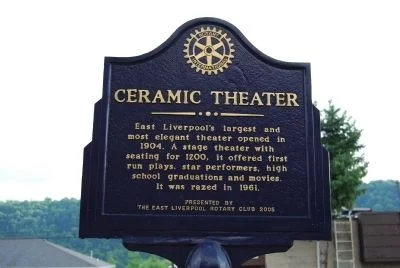
Ceramic Theater historical marker, photographed July 3, 2011
Entertainment1904–1961

Ceramic Theater

A vanished playhouse brought touring performers, graduations and movies into the pottery city’s daily life.

East Fourth Street near Market Street

Mike Wintermantel · photographed July 3, 2011 · Historical Marker Database
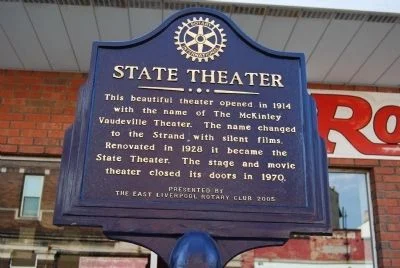
State Theater historical marker, photographed July 3, 2011
Entertainment1914–1970

State Theater

McKinley, Strand and State: one theater’s changing names trace the transition from vaudeville to the movie-house era.

St. Clair Avenue just north of Sixth Street

Mike Wintermantel · photographed July 3, 2011 · Historical Marker Database
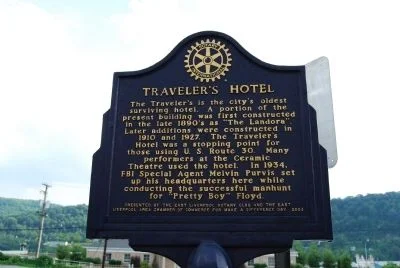
Traveler’s Hotel historical marker, photographed July 3, 2011
HospitalityLate 19th–20th century

Traveler’s Hotel

A historic hotel connects the city’s pottery trade, visiting performers and long-distance travel.

East Fourth Street near Market Street

Mike Wintermantel · photographed July 3, 2011 · Historical Marker Database
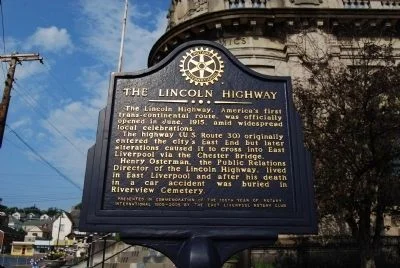
Lincoln Highway historical marker, photographed July 3, 2011
TransportationEarly 20th century

Lincoln Highway

East Liverpool’s streets were part of a coast-to-coast travel story that changed as road routes and bridges evolved.

Broadway near East Fifth Street

Mike Wintermantel · photographed July 3, 2011 · Historical Marker Database
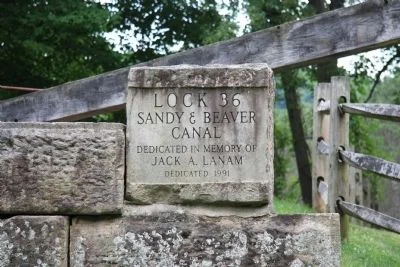
Lock 36 historical marker, photographed July 15, 2011
Canal history19th century · restored 1991

Lock 36

A restored canal lock makes the mechanics of moving freight through the creek valley visible.

Beaver Creek State Park, near Gaston’s Mill off Echo Dell Road

Dale K. Benington · photographed July 15, 2011 · Historical Marker Database
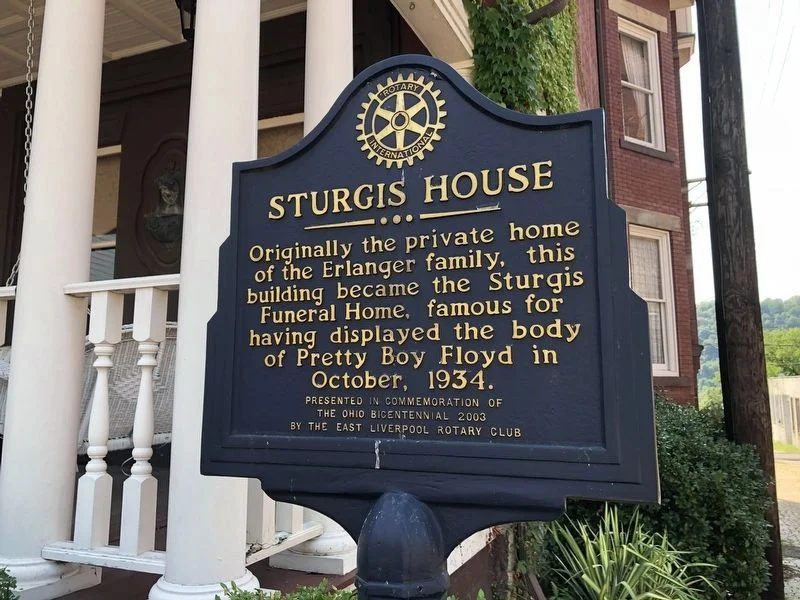
Sturgis House historical marker, photographed September 10, 2020
Architecture + people1934

Sturgis House

A former residence and funeral home became a local setting for the national story of Pretty Boy Floyd.

Peach Avenue at West Fifth Street

Devry Becker Jones (CC0) · photographed September 10, 2020 · Historical Marker Database
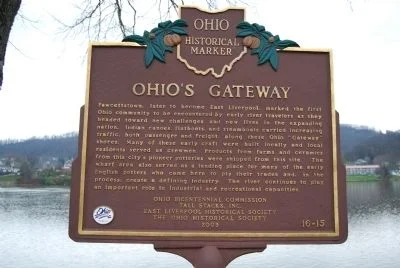
Ohio’s Gateway historical marker, photographed November 20, 2011
River historySettlement and river trade

Ohio’s Gateway

The riverfront tells a story of arrivals, freight and the people who shaped the pottery city.

Broadway Wharf, reached from Walnut Street

Mike Wintermantel · photographed November 20, 2011 · Historical Marker Database

Open the complete marker guide → · Follow the Heritage Trail →

EAST LIVERPOOL PHOTO VAULT

Look into the city’s photo album.

The Cleveland Memory East Liverpool collection was built with material from the East Liverpool Historical Society's photo archive and Cleveland Press collections.

DEEP CUTS

The stories that make people say, “Wait—this happened here?”

Labor, transportation, population growth and vanished landmarks reveal another side of the river city.

A CITY GROWS AROUND THE KILNS

Population followed the industrial boom.

Federal census figures show the scale of East Liverpool’s transformation from a small river town into an industrial city.

Reading the chart: These selected census years show the industrial growth period and the smaller population recorded in 2020. This is a selection of milestones, not a complete series of every census year.
SOURCES & EVIDENCE

Good history should show its receipts.

Explore the records, museum research and archival collections behind these stories. Local lore stays labeled as lore unless corroborated.

HERITAGE TRAILS

History you can actually go see.

Markers, buildings, museums and landscapes turn local history into a self-guided visitor experience.

THE NEXT CHAPTER

Tell the whole story—including the hard years.

The pottery boom built a city of factories, civic institutions and busy streets. Industrial losses and disinvestment left gaps in that landscape. Preservation has saved important pieces; reuse and reinvestment remain an uneven, unfinished task.

Historic reuse
Buildings that once represented industry can become housing, hospitality, business and cultural space.
Riverfront
The Ohio River built the city and can become a visitor asset again.
Small business
New operators can make historic districts active instead of museum pieces.
Identity
Pottery, surveying, architecture and tri-state history are economic assets when packaged well.
KEEP EXPLORING

Turn history into a route.

FROM THE PHOTO VAULT

See the evidence up close.

Explore all archive images →
THE CITY, SENT THROUGH THE MAIL

East Liverpool in postcards.

Discover the Diamond, Fifth Street, schools, churches, pottery works and the Ohio River in a locally hosted collection. Read the printed captions, compare different views and open each card at full size.

Browse the postcard collection →

A trolley ride to Rock Springs

Follow East Liverpool’s connection to the vanished park in Chester, with photographs of the journey and the people who operated it.

Explore Rock Springs Park →